Posts

Illinois Prevailing Wage Act Part 2 - What a Public Entity Needs to Know

Last week we introduced the Illinois Prevailing Wage Act ,  820 ILCS 130/0.01,   et. seq, and summarized the broad scope of the Act.  This post will elaborate on the Act from the standpoint of the public body.  The Act requires that "prevailing wage" be paid to laborers, mechanics and other workers for "public works" projects.  A public works project includes essentially any construction, maintenance, and equipment installation for any "public body" or for any project receiving certain public funding.  A public body is defined by the Act to include  State agencies, municipalities, public districts (yes, this includes fire protection districts, drainage districts, water and sanitary districts, soil and water conservation districts, etc.), school districts, "and every other political subdivision."  A public entity would be well advised to assume that it is required to pay prevailing wage unless it has specific opinion from counsel to the contrar...
Illinois' Prevailing Wage Act Part 1 - What Is It and When Does It Apply?

Illinois' Prevailing Wage Act , 820 ILCS 130/0.01, et. seq , has been around for a long time but was revamped in the past few years, and the changes are significant.  The Act requires that "prevailing wage," as determined for similar work for the county or locality in which the work is to be performed, be paid to all "laborers, mechanics and other workers" employed in any "public works," and includes hourly cash wages plus fringe benefits for training and apprenticeship programs, health and welfare, insurance, vacations, and pensions.  "Works" is essentially construction work, but "construction" is defined to include maintenance, repairs, and equipment assembly and disassembly.  "Public" works are defined to include any "public body," including State agencies, municipalities, public districts, school districts, "and every other political subdivision...," and also to include work done by a private entity...

Agreements to Arbitrate - Update on Carr v. Gateway

Last February I wrote about the 5th District Appellate Court's decision in Carr v. Gateway, Inc .  here .  In this case, the designated arbitration forum stopped accepting consumer disputes.  The arbitration agreement was very specific as to the private forum for the arbitration and the rules to be used, and even included a clause to penalize any party seeking to arbitrate the dispute in another forum.  Well, the Illinois Supreme Court reviewed the decision and released its opinion  this week, affirming the Appellate Court's judgment.  Particularly emphasizing the penalty clause, the Court noted that the arbitration forum was integral to this agreement, Section 5 of the federal Arbitration Act did not apply to appoint a substitute arbitrator, and therefore the plaintiff's claims could proceed in court. Although this was an Illinois case, the Court considered precedent from other jurisdictions, and I believe really made a thorough analysis and wrote a well...

Public Insurance Adjuster Contracts and New Licensing Requirements

Image
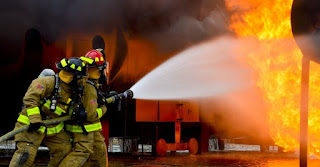
This post has been updated, see the new post here .   Imagine that your home is destroyed in a fire overnight.  After family and friends, you would likely next call your insurance company to report the catastrophe and initiate a claim.  The person from the insurance company who investigates your claim and calculates the amount to be paid for the loss is called an "adjuster."  About this time you also attempt to read through the fine print morass that is your insurance policy, and realize the difficulty of making sense of it all.  Now imagine that after you report the claim you receive a letter from a "public adjuster," which helpfully points out to you that the insurance company's adjuster is an employee of the insurance company and therefore tied to the insurer's interests, and that the public adjuster is available to help you negotiate a better settlement with the insurance company, often for a percentage of the settlement proceeds, say for example 1...

Illinois Supreme Court Denies Leave to Appeal in Four Home Repair and Remodeling Act Cases

I previously noted here that the Illinois Supreme Court's November 2010 Docket included petitions for leave to appeal for four recent cases involving the Illinois Home Repair and Remodeling Act  (the "HRRA).  Here are the four cases: Artisan Design Build v. Bilstrom  , ILSC No. 109371, discussed  here . Fandel v. Allen , ILSC No. 109887, discussed  here . Roberts v. Adkins , ILSC No. 109909, discussed  here .     Universal Structures, LTD. v. Buchman   , ILSC No. 110842, discussed  here . On November 24, the Court denied leave to appeal to all four.  For Artisan Design Build , Fandel , and Universal Structures , this means that the decision of the appellate court is final (although these cases are not necessarily over, depending on the disposition of each case at the respective trial courts).  For the Roberts case, however, the Supreme Court directed the Third District Appellate Court to vacate and to reconsider its ...

Overhanging Tree Limbs - If You Own the Tree, You Own the Limbs

This post has been updated.  See the new post here . Lawyers are often asked about liability issues regarding trees along neighboring properties.  Depending on which neighbor is asking, the question goes like this: A.   I own a tree that has branches extending over my neighbor's property.  My neighbor wants me to cut it down or trim it back.  Do I have to do so?  If the branches break and fall, am I responsible for damage caused to my neighbor's property (or injuries)? or B.  My neighbor's tree has branches that extend over my property.  I have asked them to cut it down or trim it back, but they refuse to do so. What recourse do I have? The general rule is if you own the tree, you own the limbs, and if the tree limbs extend off your property onto your neighbor's property, your neighbor has a right to remove those limbs up to the property line.  Secondly, if a tree is on your property and a limb falls from that tree and damages your ...

Four More Home Repair and Remodeling Act Cases Petition Illinois Supreme Court for Leave to Appeal

In the wake of the Illinois Supreme Court's recent decision in    K. Miller Construction Co. v. McGinnis , ILSC Case No. 109156, the Court's November Docket book includes four more Home Repair and Remodeling Act cases in the Leave to Appeal Docket.  This means a party in each of these cases has sought to appeal the decision of the Illinois Appellate Court, but the Illinois Supreme Court has not yet determined whether or not it will grant the appeal and hear the case.  The four cases have all been discussed on this blog previously, as follows: Artisan Design Build v. Bilstrom , ILSC No. 109371, discussed here . Fandel v. Allen , ILSC No. 109887, discussed here . Roberts v. Adkins , ILSC No. 109909, discussed here .     Universal Structures, LTD. v. Buchman   , ILSC No. 110842, discussed here . The Court will likely announce by the end of the month whether or not it will hear appeal of these cases.  Stay tuned. Nate Hinch is an attorne...